

Catching up with the Cooper Project
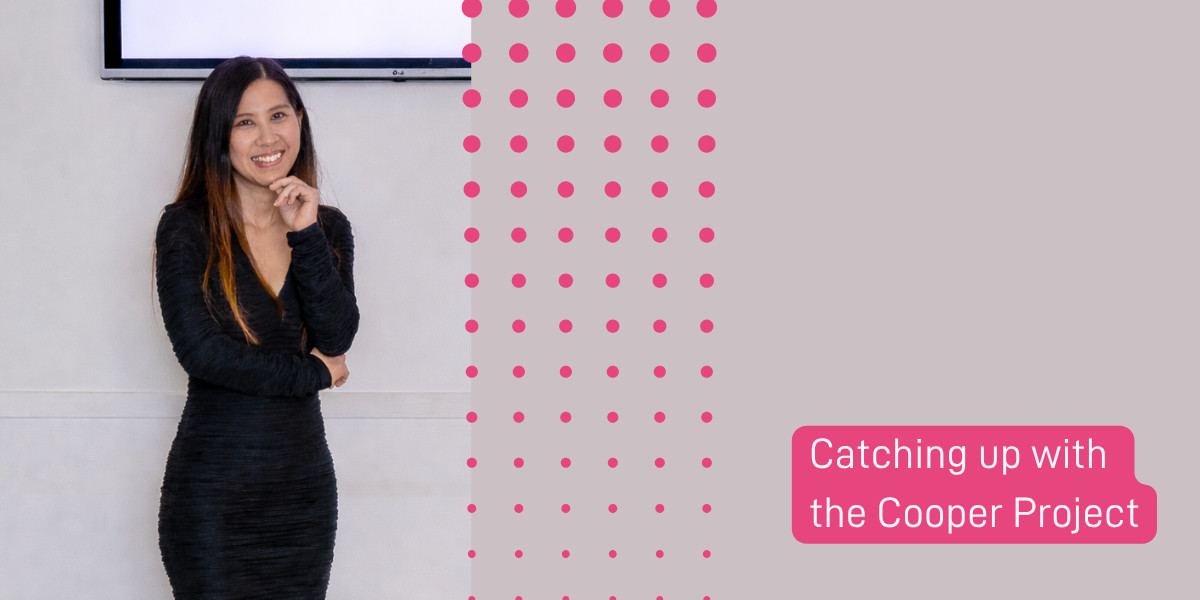
It was a busy start to the year on the Cooper Project, so we wanted to look behind the scenes to explore trends in current tech startups, the values and red flags visible in early-stage founders and their ideas, and to consider how AI is changing the landscape. What better insight than from Incubator Manager, Rose Tran, who has supported Sheffield’s tech startups for almost seven years now. In this Q&A she covers all of the above and really hammers home the message that all early-stage founders should know: problem before product.
The Cooper Project has been oversubscribed recently – what does that say to you about entrepreneurship right now, and about the Cooper Project itself?
I think it shows a clear increase in demand for starting tech businesses, especially AI-driven ones. We’ve seen a large number of applications for the Cooper Project as a result.
It’s a very positive sign for the region, as it shows more people are exploring entrepreneurship and starting their startup journey. It also highlights strong interest in the type of support and environment we provide.
I think it also reflects growing awareness of the programme, and the trust founders place in the mentoring, network, and support we offer to help move their ideas forward.
When you’re reviewing applications, what makes an idea or a founder stand out straight away?
We’re particularly interested in what drives founders to start a business and what their motivation is. If someone has the right mindset, even if their first idea doesn’t work, they’ll find a way to adapt or pivot.
In terms of the idea, we look for commercial viability and scalability. Strong ideas tend to solve urgent, meaningful problems. It also stands out when founders already understand the problem and market well - for example, if they’ve spoken to potential customers or done some early validation. That shows they’re thinking practically about how the idea could work in the real world.
How important is it that founders really understand the problem they’re trying to solve – especially if it’s something they’ve experienced themselves?
It’s very, very important. We always say a business should start with the customer problem and the market, not the product.
A business only grows if it solves a real problem that customers genuinely want to get rid of. When founders define that problem clearly, it helps guide product development and makes the route to market much clearer.
If founders have experienced the problem themselves, it can give them deeper insight into user needs. That’s a strong advantage - but it’s still important to validate those assumptions by speaking to others.
Understanding the problem well is one of the first things we look for, because it’s often the foundation of a successful product.
Does it make a difference if a founder has technical ability, and how is AI changing things for non-technical founders?
Technical ability can definitely be an advantage. If founders identify the right problem, they can build and test a product quickly. That said, AI tools and no-code platforms are making a big difference for non-technical founders. They can now create simple prototypes in hours and start testing ideas much earlier.
In many ways, AI is lowering the barrier to entry. It allows founders to validate ideas quickly and learn from the market before investing too much time or resource.
Ultimately, what matters most is not just technical ability, but how well founders understand the problem and how quickly they can learn from their customers.
Beyond the idea, how much does founder commitment and mindset matter at this early stage?
It plays a vital role. Founders with strong commitment and the right mindset are much better able to navigate the journey and stay motivated through the ups and downs.
At this stage, ideas will evolve - sometimes completely - so founders need to be open to learning, adapting and responding to feedback. This isn’t a sign of something going wrong, it’s a sign that a person is learning.
We often say the founder journey is like a rollercoaster, and people need to be prepared for that.
What does real commitment look like in practice – in terms of time, energy and investment?
It depends on each founder’s situation, but consistency and persistence are key. Founders need to spend time really thinking about the problem and the solution they’re building.
Being in the right environment also helps — connecting with like-minded people can be very motivating. At the same time, founders need to be aware of their financial runway, as they may not generate income for months or even years while building the business.
Are there any common red flags that suggest someone might not be quite ready for the Cooper Project yet?
Some common signs include having too many other commitments, where it’s difficult to dedicate enough time and focus to building a startup.
Sometimes founders aren’t yet clear on the problem they want to solve, or what they want to achieve. In other cases, the idea is still being treated more like a hobby than something they want to grow seriously.
Another red flag is when founders haven’t explored the market or spoken to potential customers, so the idea is based mainly on assumptions.
That said, this doesn’t mean someone can’t become a founder — it may just mean they need more time to validate their idea and prepare before joining a programme like the Cooper Project.
What are the signs that an idea might struggle to gain traction in the real world?
Some signs include when an idea doesn’t address a real or meaningful problem that customers want solved.
It can also be a challenge if there’s no clear strategy for reaching paying customers, or if the target market is very small with limited potential to grow.
Ideas that are based mainly on assumptions, without customer validation, can struggle - as can those with little differentiation from existing solutions.
This year, you introduced a new eight-week programme for very early-stage founders – Project26. How did this differ from the Cooper Project and in what ways did it help the cohort of founders?
We introduced Project26 in response to increasing demand, and because there aren’t many programmes in the region focused on very early-stage tech founders.
It helps founders build a strong foundation and understand the basics of what it takes to start a business. It’s about preparing them for the next step. If there’s strong potential, founders can then progress into the main Cooper Project for more in-depth support.
Last month, seven founders graduated from Project26 at a pitching event in front of a panel of startup experts and fellow founders from the Cooper Project. I was so proud to see the difference from day one of the programme; the confidence and clarity demonstrated across the cohort highlighted just how far they have come.
Something Project26 definitely helped our founders with is the importance of validation. Several founders shared how the programme encouraged them to pause, reassess, and refine their ideas – in some cases leading to significant pivots.
Did you notice any particular trends in the first cohort?
There were a few common trends. Many founders came from strong industry backgrounds but are still developing technical skills or looking for co-founders. Most were first-time founders.
We saw a lot of AI being integrated into products and processes, helping speed up development and improve user experience. Founders came to us at different stages - from idea to MVP - but all were actively validating their ideas and speaking to customers.
It’s been really encouraging to see how quickly teams iterated based on feedback, to refine their positioning or target customers.
For someone sitting on an idea and wondering whether to apply, what would your advice be?
Start with market research, and most importantly, talk to people. You don’t need a finished product to start those conversations. In fact, it’s better to speak to potential customers early to test whether the problem is real and worth solving. This is about co-creating a product with your users from day one.
I’d also say don’t wait for everything to feel perfect before applying. The Cooper Project is designed to help founders learn, validate, and connect with the right people. And if someone isn’t quite ready yet, we can help signpost them to the right support.
Support for early startups in Sheffield
Startup Social – A relaxed monthly meetup for founders, entrepreneurs and the startup-curious to connect, share ideas and learn from each other in a friendly, informal setting.
Business Sheffield | TechForge Accelerator – A five-session, in-person programme for early-stage tech startups, supporting founders from idea through to MVP and initial trading.
Tech SY – A useful starting point for exploring funding and support, with an online directory of tech programmes to help founders find what fits their needs.
News / Podcasts / Events