

Cooper alumnus Lewis Sharman launches Zurva
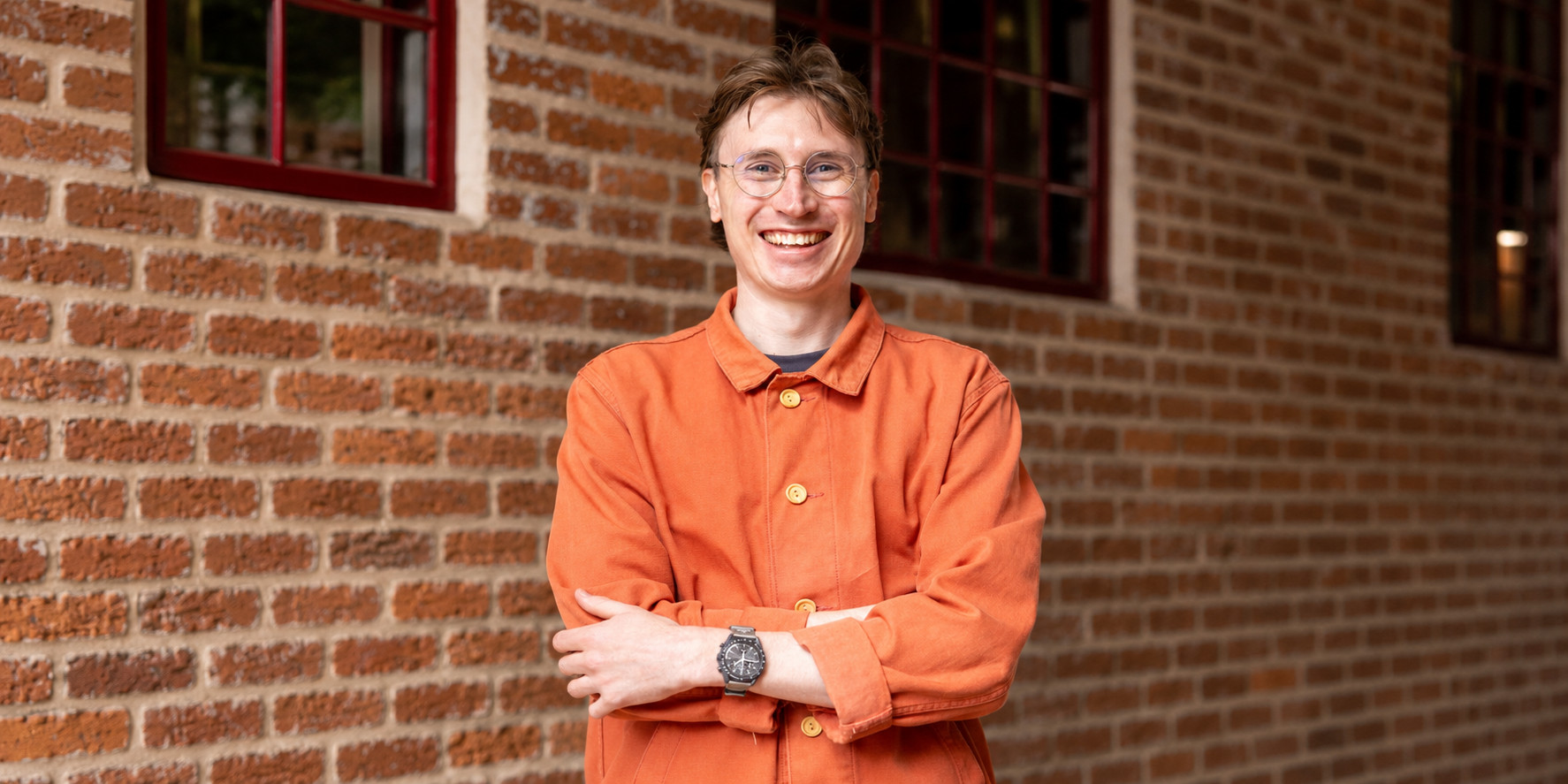
Lewis Sharman joined the Cooper Project back in 2024 with an idea, plus the industry experience and technical knowledge to believe he could make it work.
What he didn’t yet have was experience of being a founder, or a clear enough understanding of the problem his technology needed to solve.
Now, two years on, Lewis is preparing to launch Zurva Spatial, a new augmented reality surveying tool designed to make professional building energy and retrofit assessments faster, more accurate and more accessible. As a part of our Cooper Project alumni network and a regular in our coworking space, we’ve loved seeing Lewis’s journey progress, proving that often, great ideas need space and time to develop before they reach product stage.
Joining the Cooper Project
Lewis joined the Cooper Project with his consultancy, Turbo3D, using existing scanning technology to support the retrofit of buildings. He was referred to the programme through South Yorkshire Mayoral Combined Authority (SYMCA), following work he was undertaking with them in the region, using the technology.
At this stage, Lewis was new to entrepreneurship. He had confidence in his technical and industry experience, but realised there were other parts of building a business that were unknown to him.
“I knew I had the industry knowledge and the technology know-how, and I had an idea I felt confident I could deliver. But I hadn’t experienced entrepreneurship before, it’s not the background I come from.”
For Lewis, the Cooper Project provided some of the missing pieces: a peer network of other founders, guidance and, importantly, the opportunity to test whether his idea was actually addressing a meaningful problem.
Rather than rushing to build the technology, he had the opportunity to explore the market and understand where it could genuinely add value.
Learning through the market
A key part of that process came through an opportunity to work on Let Zero, the UK's first retrofit support service designed specifically for the private rented sector.
Led by South Yorkshire Mayoral Combined Authority and funded by Innovate UK, the pilot brought together specialist partners including Pure Leapfrog, Building Research Establishment (BRE), Centre for Energy Equality, Sheffield Hallam University, University of Sheffield's Advanced Manufacturing Research Centre, Sustenic and Planarific.
Lewis contributed experimental retrofit surveys to the project through Turbo3D, giving him the opportunity to work directly in the retrofit market and investigate where scanning technology could be useful. As a result, it became an important part of the validation process for the idea that would eventually become Zurva. He explains,
“The Let Zero project gave me the opportunity to explore the market properly. I could see where the technology was useful, where it wasn't, and what practitioners actually needed.”
That experience helped Lewis move from ‘I can build this’ to ‘I understand why this needs to exist’ - a distinction that gave him the confidence to progress with the build of his first product.
The Cooper Project encourages founders to test their assumptions, gather insight and learn from the people experiencing the problem before investing too heavily in a solution. For Lewis, that meant his original idea evolved through real-world experience rather than being built in isolation.
From insight to product
That process has now led to Zurva, a company focused on supporting practitioners to accelerate the delivery of warm, energy-efficient homes while helping unlock the wider social value of the transition away from fossil fuels.
As a qualified Retrofit Assessor, Lewis continues to carry out assessments himself, helping him stay close to the changing requirements of the industry. He leads product design at Zurva, with the aim of making the technology genuinely useful to practitioners, industry, homeowners and residents.
The first product, Zurva Spatial, is an augmented reality iOS survey app designed to replace hand-drawn floor plans created during retrofit assessments.
Users can create simple floor plans and record details about walls and windows, with the aim of making the process faster, more accurate and more professional.
The product is launching with an early-access approach, with active updates expected as Lewis and the team continue to refine the experience. There is also a limited offer of 10 free floor plans for new users.
And this is only the first stage. Zurva also offers a bespoke service for practitioners, while an Assessment Platform is in development as the next stage of the product.
Progress driven by discovery
Lewis's journey from Turbo3D to Zurva is a good reminder that entrepreneurship isn't always about having the perfect product idea at the start. Sometimes, it's about having an idea good enough to investigate, and then being willing to change, test and develop it as you learn more.
With Zurva Spatial about to launch, Lewis has moved from exploring what might be possible to putting the product into the hands of the people it was designed for. It’s the kind of progress we love to watch unfold, and we can’t wait to see what’s next.
You can learn more about Zurva and request access to Zurva Spatial, on the website: zurva.co.uk.
News / Podcasts / Events